This visual comparison documents the shift in media consumption and technology within personal spaces. We are analyzing the transition from the productivity-focused 80s to the brand-driven 90s.
DATA SET 01: THE 1980s ANALOG WORKSTATION ⌨️
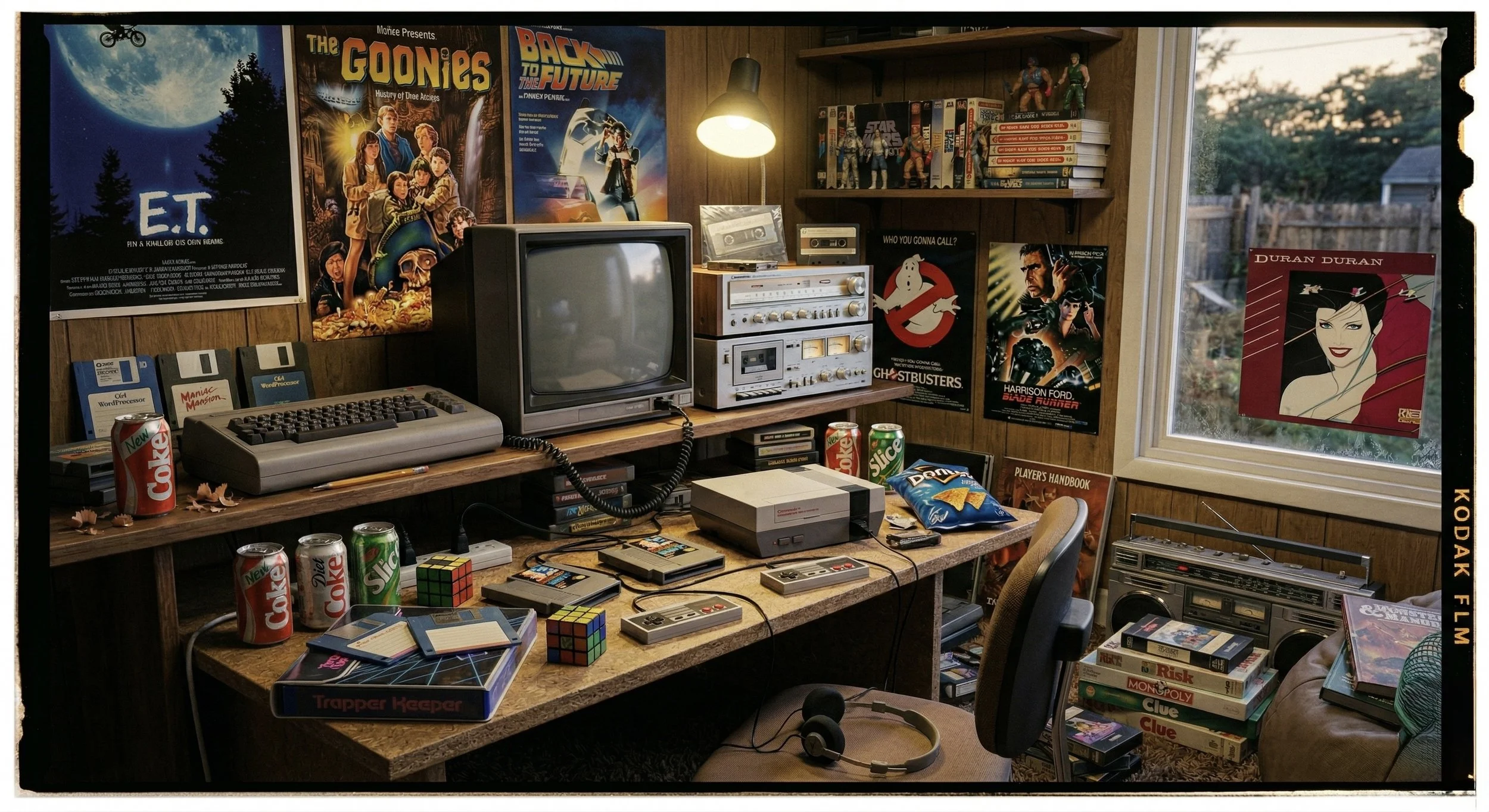
80’
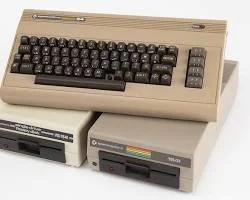
Visual Analysis: The central hub is a Commodore 64 (C64) 8-bit computer, complete with a 1541-style floppy disk drive and 5.25-inch disks. This represents a workspace built for both productivity and early gaming.
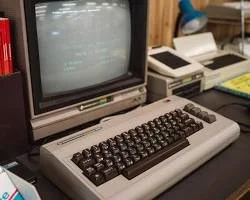
Display: A classic CRT monitor 📺 serves as the primary screen.
Multi-Platform: Both the C64 and the Nintendo Entertainment System (NES) 🕹️ are integrated into the same station.
Media Storage: Shelving contains VHS tapes 📼 and an analog audio stack with a dual-cassette deck.
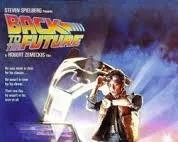
Atmosphere: Period-accurate posters including E.T., The Goonies, Back to the Future, Ghostbusters, and Blade Runner.
Consumer Goods: Features "New Coke" 🥤 and Slice soda cans.
Key Artifact: An authentic Trapper Keeper 📕 binder.
DATA SET 02: THE 1990s POP-CULTURE SHRINE 👟
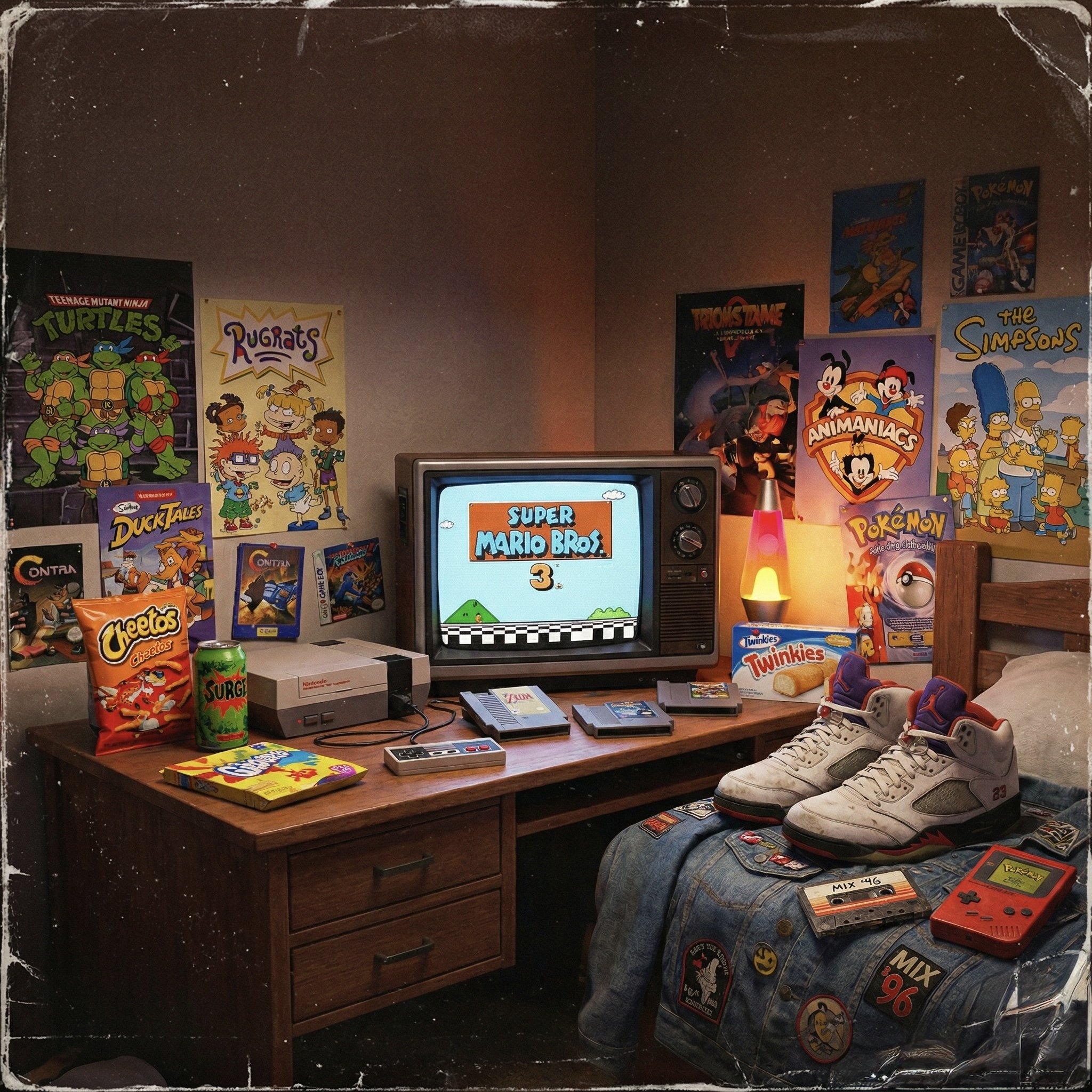
90’s
Visual Analysis: The 90s space shows a move away from computation toward pure entertainment and "hype culture" branding. The desk is no longer a workstation but a dedicated media center.
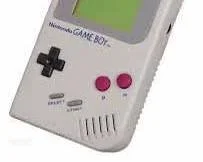
Gaming: A wood-paneled CRT television 📺 displays Super Mario Bros. 3 on the NES 🕹️. A mobile Nintendo Game Boy 🔋 is also active.
Audio: A portable boombox 📻 has replaced the heavy component stereo stack.
Wall Art: The décor is dominated by animated franchises: Rugrats, Animaniacs 🤪, The Simpsons, and TMNT 🐢.
Hype Artifacts: Features the iconic Air Jordan 5 👟 sneakers and a 'MIX '96' cassette tape 📼.
Consumer Goods: Verified by the presence of Surge soda 🥤 and Twinkies snacks.
The data confirms a clear evolution. The 80s bedroom was a technological tool-kit 🛠️ for early adopters. The 90s bedroom transformed into a sensory archive 🛍️ of pop-culture and brand loyalty.